I received an assignment to design a poster based on a novel. The design brief was clear - a man in meditation, a beautiful woman in the backdrop, perhaps a river and an ancient setting. In just a few lines, the client mentioned Siddhartha and Kamala, and that was enough to spark my curiosity. Thanks to Amazon’s now service, the book was in my hands within 10 minutes.
my niche
Monday, March 2, 2026
Between Searching and Finding: My Tryst with Siddhartha
Sunday, November 2, 2025
Basic Income for the Arts
Big news for the creative world — and something India could truly take inspiration from. ππ¨
Ireland has just made its Basic Income for the Arts permanent!
Artists, writers, musicians, and performers will now receive around €325 a week (~₹1.25 lakh/month or $1,500) a steady income that lets them focus on creating rather than merely surviving.
The initiative began as a 3-year pilot in 2022 with about 2,000 participants, and it worked so well that it’s now here to stay. The Irish government calls it “an Investment in Imagination.”
And rightly so. Because when creativity isn’t suffocated by rent or bills, it begins to pay attention to truth, to culture, to beauty, to everything that makes us human.
As all societies grapple with the growing threats that AI poses to jobs and livelihoods, many policymakers and researchers will now be watching Ireland’s bold experiment closely.
One reason Ireland has managed to break through global hesitation around such policies is its strong public support not just from artists, but from citizens at large. The roots of this support go back to the COVID-19 lockdowns, when the value of art, culture, and shared imagination became undeniable, and furlough programmes helped people survive sudden job losses.
This could be a defining model for how societies choose to value creativity. Imagine if India took a step like this treating art not as a luxury, but as a public good.
If creative people had the time and stability to simply create, what wonders might emerge?
Read more here
Tuesday, June 4, 2024
Swar Sannidhya – Understanding the relation and interplay of musical notes
Embarking on a life-changing, eight-day odyssey led by Vidushi Anuradha Kuber and Dr. Chaitanye Kunte, alongside Shri Saumitra Kshirsagar and Shri
Keyur Kurulkar. This experience was nothing short of transformative. Surrounded
by such an exceptional group of individuals, I found myself deeply grateful for
the opportunity to learn, interact, and grow in their presence. The support I
received throughout the workshop was invaluable. I felt enveloped in a
tapestry of wisdom, gratitude, and unparalleled learning.
Having attended numerous music workshops in Delhi, from half-day sessions to five-day intensive workshops, I've often heard the same question: "How to sing in a high tempo?" The quest for mastering high-tempo singing often dominated but was still challenging. On the very first day of Swar Sannidhya, Anuradha Tai dispelled this fear by making us sing a gat in Raag Maru Bihag, composed by Dr Aravind Thatte. We began with a slower tempo, memorising the composition, and gradually increased the speed. Before we knew it, we were effortlessly singing at 420 bpm, seamlessly synchronising our voices with the rhythm of the composition.
Here is some glimpse of the eight days.
Thursday, May 2, 2024
Fear and flashbacks amidst Delhi's school bomb threat
Yesterday began like any other day, with the usual hustle and bustle of sending my daughter to school and getting ready for work. Little did I know that a simple news flash would reignite memories of past traumas that I might faded after the Covid onset.
I was in my office, sitting on my desk, engrossed in my tasks when a colleague approached me, asking in which school my daughter studied. I replied with name of school not knowing what was flashing in the news. My colleague informed me about the treat received by schools and also that some schools are planning evacuation. My heart skipped a beat as I felt a chill run down my spine.
Immediately, I dialled the school's number, the phone seemed to ring endlessly before someone answered. With bated breath, I inquired about the situation, relief flooding over me as I learned that my daughter was safe but would be kept inside until further notice. The school administration assured me they were taking necessary precautions, with police present and the premises thoroughly searched for any suspicious objects. They also mentioned I could pick up my child if desired.
Without a moment's hesitation, I rushed to pick up my daughter from school. On the way, I called my husband and he was unaware too as there was no communication from the school yet. The usually familiar route seemed unnervingly long yesterday, each passing minute filled with dread and apprehension. Along the way, I couldn't help but recall the chilling events of the past that still haunt me to this day.
The regular route to school seemed like an eternity, the sight of fire brigades and ambulances serving as stark reminders of the fragility of life. Memories flooded back of the terror attack on the Parliament of India in 2001, where my father worked. The streets of Delhi transformed into a warzone, and the Watch and Ward personnel who lost their lives that day were our neighbours – their absence a constant reminder of the horrors endured.
And then there were the 2005 Delhi serial blasts, a day when my family narrowly escaped tragedy by mere minutes. My mother and sister were in the vicinity, their usual trip to the local market for Diwali shopping spared by fate. The thought of how close we came to losing them still sends shivers down my spine.
As I finally reached the school and embraced my daughter tightly, I couldn't help but feel a mix of gratitude and sorrow. Gratitude for her safety, but sorrow for the world she's growing up in – a world where fear and uncertainty seem to lurk around every corner.
But the toughest part was yet to come – explaining to my 8-year-old daughter why she was being picked up early from school. How do you convey the darkness of the world to a child who believes in nothing but beauty and goodness? It's a delicate balance, wanting to shield her from the harsh realities of life while instilling in her a sense of hope and resilience.
Yet amidst all these, one thing remains constant – the resilience of a mother's love. Despite the fear and the flashbacks, I will continue to hold my daughter close, to cherish every moment, and to pray for a brighter, safer tomorrow.
In such times, we must hold onto hope and stand united against the forces that seek to divide us. For it is love, courage, and solidarity that will ultimately triumph over fear. And as a mother, I will do everything in my power to ensure that my daughter grows up in a world where she feels safe, loved, and valued.
Tuesday, February 27, 2024
Failures are important milestones
Today, I am typing this directly on my blog. What prompted me to write about failure are the following incidents;
- Yesterday, my daughter expressed reluctance to attend her tennis class because none of her friends were going; they were all preoccupied with preparing for their final examinations.
- This morning, a message in the parents' WhatsApp group caught my attention.
As you can see from the image above, my daughter is studying in class 2. Is it sensible to subject them to such stress at such tender ages? We have a more or less fixed routine, which might change for holidays, festivals, or family events, but preparing for examinations is part of our daily routine. We practice what we learn every day. Does it seem silly to you?
After the mid-term evaluation PTM (parents-teachers meeting), my daughter asked me about her academic performance. I shared her progress honestly, acknowledging areas of improvement and slight declines. I told her that she has improved in Hindi and there is a slight decline in her performance in Maths. Science and English are the same, and overall, she did well. However, she only seemed to remember her performance in Hindi and Mathematics and reported the same to her dad. I was there during this father-daughter conversation, and I explained to her that moving from an A to a B+ is not bad. It can happen to anybody, and it will happen again. The important thing is to know where you stand and what you need to do about it. What I wish to convey through this example is that children also understand their academic performance, results, successes, and failures. It is important that they grasp the significance of these aspects. This can only happen if they are allowed to think and decide for themselves. If we continue to subject them to pressure, they will learn and perform for their parents, not for themselves.
Moreover, a 100% success rate is another disadvantage.
But after winning this competition, she was on cloud nine, filled with pride that was so evident in her attitude. No matter how hard I tried to explain that it’s the hard work that matters, not the trophy, she remained overwhelmed with this victory. She needed to understand that her competition is with herself, and the aim is to be better than her past self. For this, I felt she needed to taste failure because this will happen eventually. Thankfully, she understood this very soon, as I participated in a singing competition a few weeks later and received the same compliments without winning or scoring any position. She was grounded without tasting failure but with the understanding that winning or losing doesn't matter, what matters is how well you prepare yourself and present with confidence.
Regarding the second matter, a message surfaced on the parents' WhatsApp group, originating from a fellow parent who is a native Hindi speaker. Despite my daughter's proficiency in Hindi, both written and verbal, she often expresses a preference for English and Science, citing Hindi as challenging due to the complexities of "bari matra" and "choti matra." I asked her why she found these matras confusing as she excels in dictations. Her response was illuminating: "Everyone says it's difficult." This sentiment was echoed in the morning message from the group. The pride we feel when our children can fluently converse in English is not the same as when they can recite a poem in Hindi. I often wonder why.
Interestingly, my daughter wasn't even aware of my proficiency in English until the COVID lockdown necessitated my participation in online meetings from home. In our household, we predominantly converse in Bengali, and I make a concerted effort to speak Hindi without interjecting English words into our daily exchanges. To her, I emphasised on beauty of Hindi language, highlighting its role in classical compositions (all bandish that she learns is in Hindi), and there is a wealth of captivating stories exclusively available in Hindi literature.
Friday, January 5, 2024
A parent's dilemma on the education system
A WhatsApp message in my daughter's school
group suggested that the children discuss five distinctive characteristics of
mammals for a class activity. Upon her return from school, I inquired about her
knowledge of mammals. She mentioned traits like giving birth, producing milk,
and having hair. Satisfied with her existing knowledge, I decided to focus on
the other morphological aspects of mammals for our further discussion.
.jpg)
I explained to her about the presence of
external ears in most mammals, citing examples of animals with and without
ears, and categorising those without ears into their respective groups. We
delved into exceptions. Upon her curiosity, we even discussed the internal, middle, and external
ear of humans using a diagram that I learned only during my graduation. The following day, I asked her if she had
discussed the external ear, but she shared that her teacher contradicted her information, stating that all mammals have a backbone.
This discrepancy left my daughter
perplexed, as we had spent considerable time discussing and resolving her
queries. Additionally, she was familiar with the vertebral column in fish,
which she encounters daily.
As a child, she wanted to trust her teacher
more than her mother, leaving me unsure of how to address the situation. While
I understand that primary school teachers may not be zoologists, I find it
disconcerting that the curriculum lacks expert verification. The discrepancy in
the EVS (Environmental Studies) book, stating a backbone as a unique feature of
mammals, added to my surprise.
Such incidents take me back to my school
days, recalling an instance where a teacher's incorrect instruction left me
feeling miserable. I now realise the profound impact teachers can have on
children's lives. Reflecting on my own experience in the 5th or 6th grade, when
we had this new thing called computer in our school. The computer lab was the
only place that had AC and we had to keep our shoes outside the room. It was a
fancy thing back then. In one of the computer classes, our teacher said lets
check who all are intelligent students in this batch. We all had to complete a
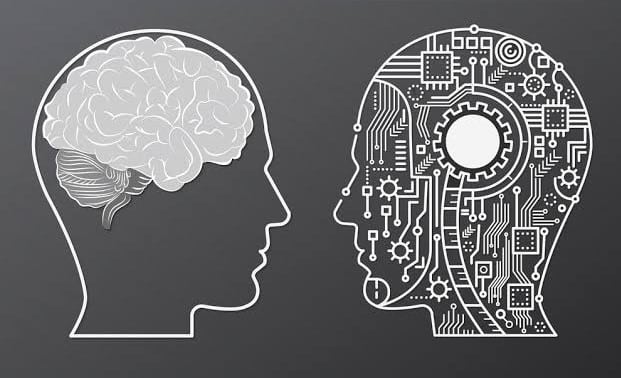
20 multiple choice questionnaire to see which side of the brain is more active.
The teacher said that students with left side active brain are intelligent and
can opt for science and students with right side active brain can opt for humanities.
So the entire class discussed the percentage towards left and comparing
results. My result of the test was exactly in the centre and the whole class
made fun of me as “good for nothing”. I felt terrible that day. Today I know the
test was not about determining science or humanities as future subjects but
rather about logical and creative thinking and today I also know that the test
result was absolutely correct. I indeed had a very balanced brain that helped
me to pursue science with creativity. I could create diagrams
(visuals) by reading the text, my collage teachers used to ask me about the
reference of my drawings and used to keep my answer sheets as no textbook
had those drawings. Today, when I am learning music that needs the creative side of the brain, I apply my
understanding of science i.e. logical thinking.
Me and my daughter discuss a lot about evolution without using terminologies but she understands how life originated and is evolving. The classification plays an important role in understanding evolution. For me, until 12th grade, it was just a 2 marks chapter in textbook that you just memorise without understanding. I had a wonderful teacher in college whose stories (theories presented in super engaging form) of evolution have motivated me to learn more. I wanted my child to experience the same from the beginning.
Doesn’t our education system need reform that recognises the need to nurture individual strengths rather than subjecting students to misleading assessments that can undermine their self-worth?
Wednesday, March 15, 2023
Some conversations with my child
I visited World Book Fair, hosted at Pragati Maidan, New Delhi about two weeks ago with my 7 year old. They had an amazing kids’ section with a variety of books on friction, science, history craft, music etc. My daughter was jumping and dancing with excitement, running from one counter to another. In one such stall, she was stopped to introduce to a book on Indian Gods and Goddesses. The staff there read the first page of the book for her and then turned towards me. He was very proud of the content of the book and was claiming it to be the best thing a child could get. I politely refused because if she believes in the existence of God, she will definitely believe in the existence of devils too for which I don’t think she is ready right now.
This
triggered me to write about some of the conversations that we (mother and daughter)
have at home about religion, surnames etc. I am not sure how to tackle these,
she is influenced by many things/beliefs in her surroundings. I would love to
know if your child asks similar questions and how you deal with them.
Watering the sun
One
evening while returning from school cum daycare, she said, “Mumma, once I become an astronaut, I can go to the
sun to give water”. She,
for the last one and a half years, is saying that she wants to become an
astronaut and a dancer. We had this conservation about her life goals earlier
where she was confused to choose between one of two and I told her that if she
plans well, she can be both. So I was aware that she wants to be an astronaut
and the possible reasons I thought were the books she reads and movies she
watches. I was surprised to hear that she wants to go to the sun to water it. I
asked her why she wants to go and water the sun and if she knows that nobody
has yet reached the sun because it is too hot. She replied, “because, everyone, in the morning, should water
the sun, we can then have our wishes fulfilled.” I asked her what is her wish that she wants
the sun to fulfil and did she had ever seen me watering the sun. I also asked
her if she think the sun needs water or not. We really had a fun conversation.
Family
There have
been several occasions when my daughter asks me why I am not called “Snigdha
Ghosh”. Once she said the same in front of my husband to which he
immediately clarified that he is not the one prompting her to ask this. I
didn’t need his clarification for sure π. She somehow thinks that a family is one that shares a common
surname. My husband and our daughter use “Ghosh” as surname and I use my
parental surname. We intentionally didn’t add both our surnames for our child
and agreed that she will use her father’s surname. At the same time, I have
always insisted on using just the first name while introducing ourselves, be it
verbal or written. I have raised objections in front of her when someone says
that one should always use full name. I have explained to her why I am Snigdha
Kar and not Snigdha Ghosh, that I am daughter of my parents too, they are also
my family and marrying and coming to Ghosh family doesn’t separate me from Kar
family thus my name is Snigdha Kar. A family is not identified with surnames
they use but with the bond of love that is there for each other. A family could
be anything, not just father, mother, you and your siblings, it can be more, it
can be less…love is what makes a family.
What’s my religion?
I was quite
shocked when she directly asked me what’s her religion. I was definitely not
prepared for this and I didn’t get any context from her as well. My spontaneous
reply to her was that she is born into a Hindu family but what religion she
belongs to is something that she needs to identify as she grows. I told her
that I am also born into a Hindu family, but I don’t follow the religion as
such. I visit temples, mosques, churches and gurudwara, I sometimes do Buddhism
chanting and she is aware about this. I also told her that as I have matured, I
have decided to say mankind as my religion and nature as my god. She needs to
grow up a bit more to understand and decide for herself and I don’t know what
comes next in this series of questions. At home, we do not have any holy book
or god’s idol. The sacred part of our home is our music corner. Respecting the
instruments, books as well as food one eats is a must in our home. I love her
compassion towards the small insects in our house. π
How can one
be prepared for such questions!!!